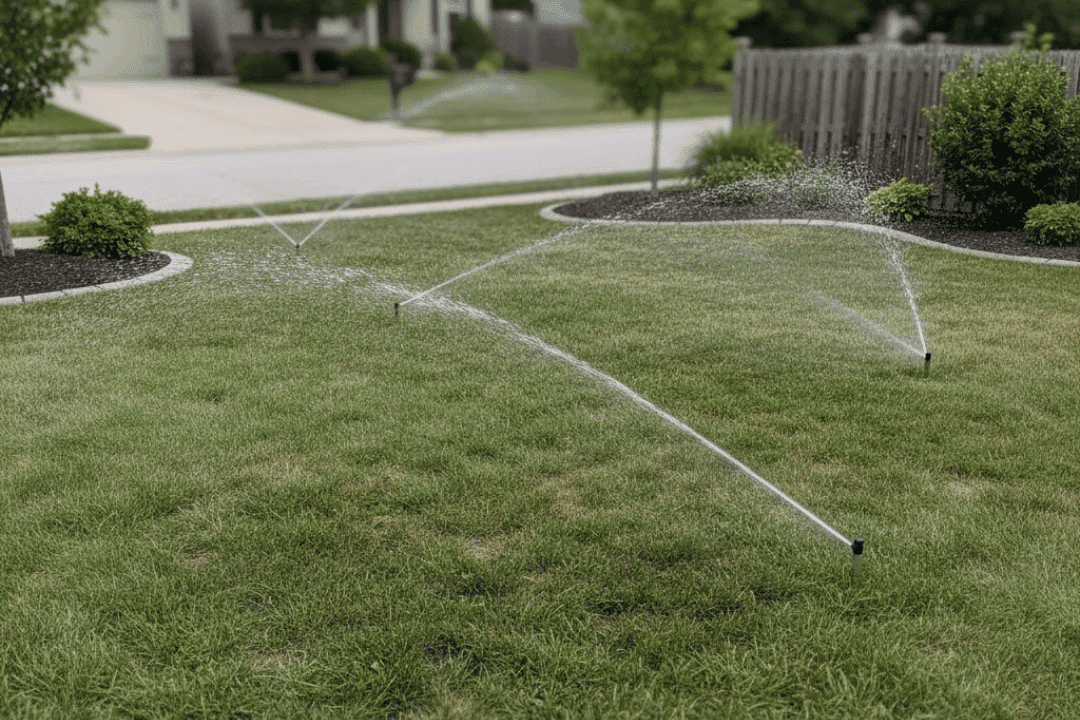
Professional irrigation services play a critical role in how landscapes, lawns, and commercial properties manage water efficiently over time. Many property owners assume irrigation is simply about installing sprinklers, but the reality is far more complex. A properly functioning irrigation system depends on thoughtful planning, accurate installation, and continuous system oversight. When these elements work together, irrigation systems deliver consistent coverage, reduce water waste, and protect long-term landscape health.
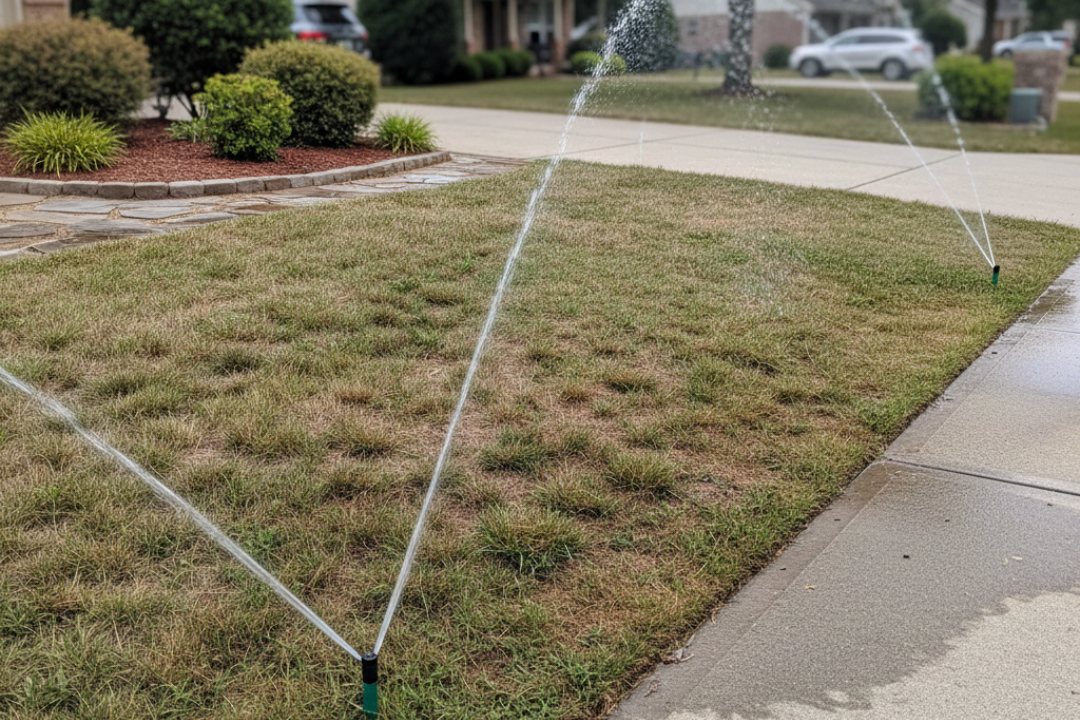
Understanding how irrigation systems function helps homeowners and property managers make informed decisions about how water is delivered across their property. From irrigation system design that accounts for soil conditions to irrigation installation that ensures precise water flow, each step contributes to overall system performance. Ongoing irrigation system support ensures the system continues working as intended long after installation.
This guide explains what professional irrigation services include, how each phase supports efficiency, and why a structured approach matters for sustainable water use.
Why Irrigation System Design Is the Foundation of Professional Irrigation Services
Irrigation system design is the planning phase where water distribution strategies are created to match the property’s unique needs.
A well-designed irrigation system starts with understanding the environment it serves. Soil composition, plant types, sun exposure, slope, and water pressure all influence how water should be applied. Professional irrigation services focus on analyzing these variables before any physical installation begins.
How Design Impacts Water Efficiency
Irrigation system design directly affects how efficiently water is used across a property. Poor planning often leads to uneven coverage, runoff, or dry areas, while thoughtful design promotes balanced hydration.
Key considerations during the design phase include:
- Zone planning based on plant water requirements
- Matching sprinkler types to coverage areas
- Managing water pressure to avoid misting or overspray
- Accounting for slopes to prevent erosion
By addressing these factors early, irrigation systems are built to support consistent moisture levels without unnecessary water use.
Design as a Long-Term Cost Control Strategy
Design is also where long-term savings are established. Efficient layouts reduce water waste, lower utility costs, and minimize future repairs. Professional irrigation services use design to prevent common problems such as overlapping spray zones or incompatible components.
Rather than reacting to issues later, irrigation system design proactively solves them before installation begins.
Understanding Irrigation Installation and Why Precision Matters
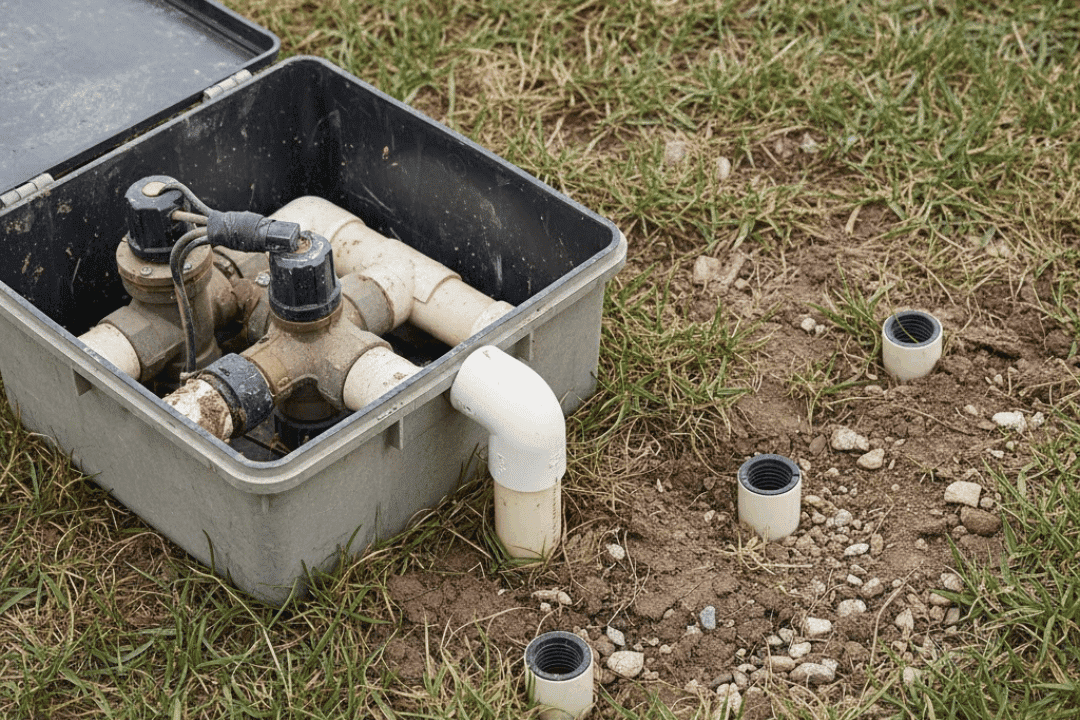
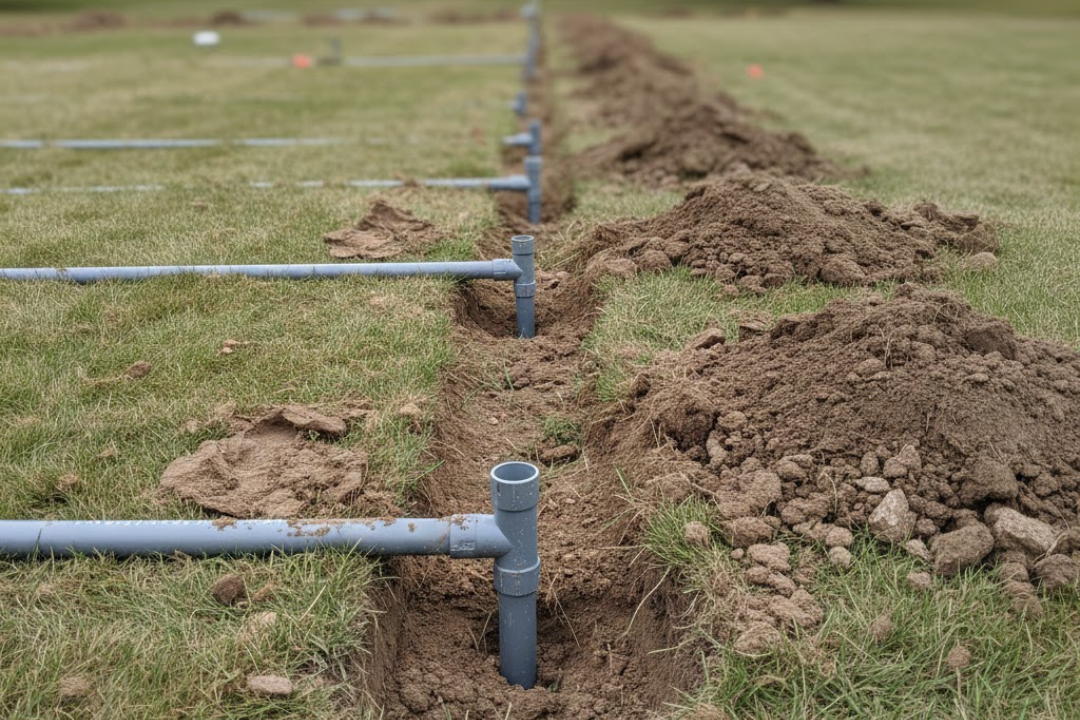
Irrigation installation is the phase where design plans are physically implemented throughout the property.
This process involves placing piping, valves, controllers, and sprinkler heads according to the approved design layout. Precision during installation ensures water flows correctly, pressure is balanced, and zones operate independently as intended.
Installation Is More Than Equipment Placement
Irrigation installation requires careful attention to detail. Improper pipe depth, misaligned sprinkler heads, or incorrect valve placement can compromise the entire system.
Effective irrigation installation emphasizes accuracy by:
- Following hydraulic calculations from the design phase
- Ensuring pipes are installed at proper depths
- Aligning sprinkler heads for optimal coverage
- Testing zones individually before system activation
Each of these steps protects system integrity and prevents premature failures.
The Role of Technology During Installation
Modern irrigation installation often integrates smart controllers, rain sensors, and flow monitoring tools. These technologies help systems adapt to weather conditions and reduce unnecessary watering.
By incorporating these tools during installation, irrigation systems become easier to manage and more responsive to environmental changes.
Ongoing Irrigation System Support and Why It Matters Over Time
Irrigation system support ensures irrigation systems continue performing efficiently long after installation.
Even well-designed systems experience wear over time. Seasonal changes, soil movement, and normal component aging can impact performance. Professional irrigation services address these challenges through ongoing monitoring and maintenance.
Preventive Maintenance as System Protection
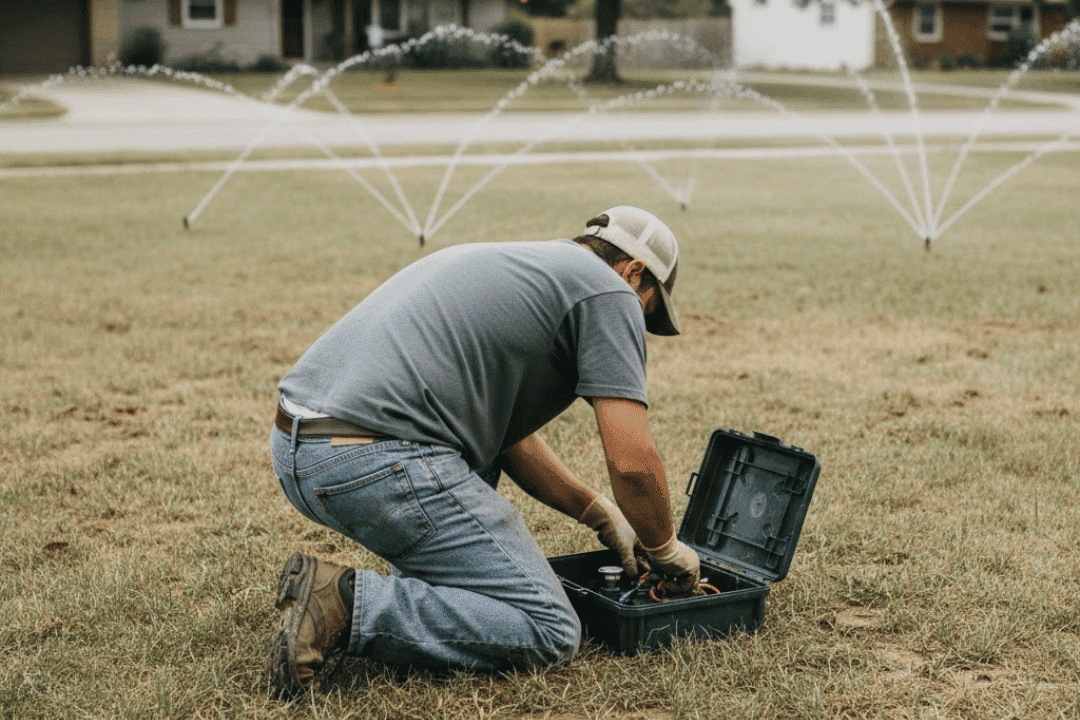
Routine irrigation system support includes inspections, adjustments, and component testing. These services help identify issues before they escalate into costly repairs.
Common maintenance activities include:
- Checking sprinkler alignment and coverage
- Inspecting valves and pressure regulators
- Adjusting controller schedules seasonally
- Identifying leaks or damaged components
This proactive approach extends system lifespan and protects water efficiency.
Adapting Systems to Changing Conditions
Landscapes evolve over time. New plants, renovations, or climate changes may require system adjustments. Irrigation maintenance services help systems adapt without requiring complete redesigns.
Ongoing irrigation system support ensures the original design intent continues to align with current property conditions.
How Design, Installation, and Support Work Together as a Complete System
Irrigation systems are most effective when design, installation, and ongoing support are treated as interconnected processes.
Each phase builds on the previous one:
- Design establishes strategy
- Installation executes that strategy
- Support preserves long-term performance
Skipping or minimizing any phase often results in inefficiencies, uneven watering, or premature system failure.
Why a Lifecycle Approach Delivers Better Results
Viewing irrigation systems as long-term infrastructure rather than one-time installations encourages better decision-making. A lifecycle approach prioritizes durability, adaptability, and efficiency at every stage.
This approach reduces emergency repairs, improves water conservation, and supports healthier landscapes year-round.
Common Misconceptions About Professional Irrigation Services
Many property owners underestimate the complexity of irrigation systems.
A frequent misconception is that irrigation systems only require attention when something breaks. In reality, systems benefit from continuous oversight and adjustments.
Another misunderstanding is assuming all properties need the same system setup. Professional irrigation services recognize that no two landscapes are identical, which is why customization is essential.
Understanding these misconceptions helps property owners appreciate the value of structured irrigation planning.
How Professional Irrigation Services Support Sustainable Water Use
Water efficiency is becoming increasingly important for both environmental and economic reasons.
Well-planned irrigation systems contribute to sustainability by:
- Reducing runoff and overspray
- Preventing overwatering
- Supporting healthier root systems
- Aligning watering schedules with seasonal needs
By optimizing water delivery, irrigation systems protect natural resources while maintaining landscape quality.
What Property Owners Should Know Before Planning an Irrigation System
Before implementing an irrigation system, property owners benefit from understanding the full scope of professional irrigation services.
Key considerations include:
- The importance of design planning
- The value of accurate installation
- The necessity of ongoing irrigation maintenance services
Educated property owners are better equipped to make decisions that protect both their investment and water usage.
Learn More About Professional Irrigation Systems with Pro Sprinklers Inc.
Pro Sprinklers Inc. helps property owners better understand professional irrigation systems through hands-on expertise gained from decades of designing, installing, and maintaining irrigation systems across residential and commercial properties. With more than 20 years of experience, the team focuses on how proper system planning, zoning, and water management directly impact efficiency, reliability, and long-term landscape health.
Explore how a well-planned irrigation system supports long-term water efficiency, consistent coverage, and healthier landscapes across residential and commercial properties. To continue learning more or to ask specific questions, visit the website or contact us today for additional information.